End-to-End Expense Management Experience
Designing a multi-role system for configuring policies, submitting expenses, and managing approvals.
project overview
my role
senior product designer
company
Paycom
timeline
16 weeks
team
product champion, developers
platform
web
Project Goal
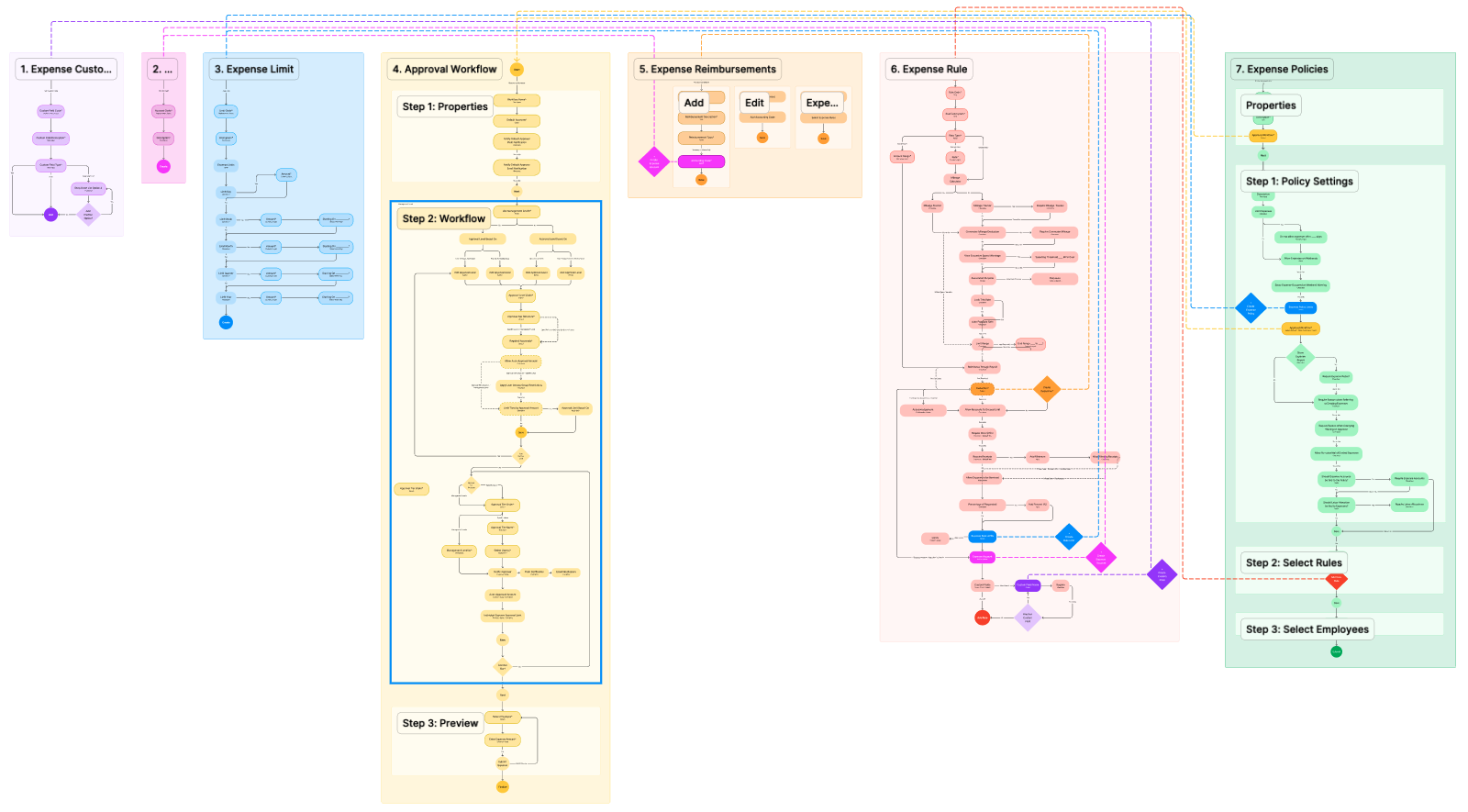
This project focused on designing an enterprise expense management platform supporting three key user roles: employees submitting expenses, administrators configuring policies and rules, and managers reviewing and approving requests. The platform included a modular configuration system for custom fields, deductions, approval workflows, and policy limits. To reduce configuration errors and improve confidence, the system also introduced a sandbox preview environment that allowed administrators to simulate changes and preview the employee expense request experience before publishing updates live.
I designed an enterprise expense management platform that supports the full expense lifecycle across multiple user roles. The system allows employees to submit expense requests, administrators to configure policies and rules, and managers to review and approve submissions. The platform also includes a configuration sandbox where administrators can preview and test policy changes before publishing them live, reducing errors and improving system transparency.
understanding the problem
Expense management systems often involve complex policy rules, approval workflows, and organization-specific configurations. Administrators must configure multiple components such as custom fields, deduction rules, policy limits, and approval chains while ensuring that employees and managers experience a clear and consistent workflow.
The challenge was to design a scalable system that allowed administrators to configure complex policies while giving employees and managers a simple and intuitive experience when submitting and reviewing expense requests.
user pain points
Payroll data is scattered across different parts of the system, making the payroll process slow and increasing the chance of missing or incorrect data.
Errors are difficult to detect before the payroll causing later payment corrections, employee frustration and extra administrative time.
Limited visibility into payroll transactions and their status.
Hard to read data.
Generate reports takes so long and requires so many manual steps causing time and delaying financial planning.
bussiness goals
Reduce payroll processing time
Reduce payroll errors
Improve visibility into payroll operations
Enable data-driven financial decisions
Improve employee payment reliability
contrains
User roles and permissions
Different users have different levels of access. Payroll specialists may need full payroll details, while HR managers or executives may only view summarized information.
Multi-location payroll regulations
Many companies operate across multiple states or countries, requiring the system to support different tax rules, currencies, and payroll regulations.
Complex payroll data
Payroll includes multiple variables such as taxes, overtime, deductions, and benefits, which increases the complexity of the data that needs to be presented clearly.
Time-sensitive payroll cycles
Payroll operates under strict deadlines between reconciling employee hours and the payment date, requiring the interface to support fast review and efficient processing.
three main roles
1
2
3
Administrators / HR
Configure expense policies and rules
Set up custom fields and deductions
Define approval workflows and policy limits
Assign policies to employees
Use a sandbox environment to preview configuration changes before publishing
Employees
Submit expense requests
Upload receipts and supporting documentation
View policy requirements and submission status
Managers / Supervisors
Review submitted expenses
Approve or reject requests
Monitor team expenses through a dashboard
user playground
To reduce errors and improve administrator confidence, the platform includes a sandbox environment where configuration changes can be tested before going live. Administrators can preview how expense request forms will appear to employees and verify that policies, limits, and workflows behave as expected before publishing updates to the system.
results
Reduce payroll processing time by 25–30%
Improve visibility of payroll status and pending issues
Help detect payroll errors earlier in the process
Reduce time spent navigating between multiple tools